
Introduction
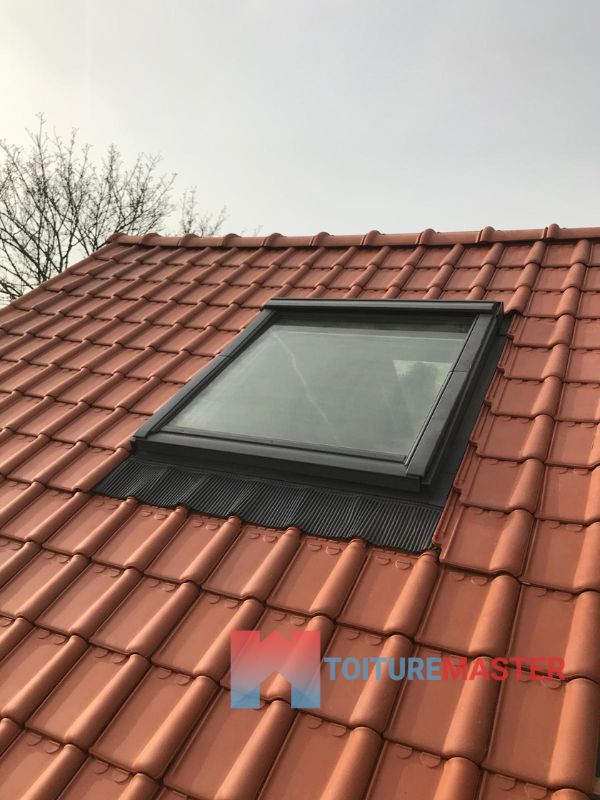
A Velux roof window fully installed in Brussels in 2026 costs between €600 and €2,200 depending on model and size. RENOLUTION grants for roof windows are currently suspended — no grant applications can be submitted for invoices dated 2025 or 2026 until a new Brussels government decision is made. However, the 6% Belgian VAT rate applies to all Velux installations on homes over 10 years old — saving 15 percentage points against the standard rate. Installation typically takes one working day per window.
Table of Contents
- Why Brussels Homes Are Built for Velux
- The Velux Model Range: What Exists and What to Choose
- GGL — The Classic Centre-Pivot in Wood
- GGU — The White Low-Maintenance Alternative
- GPU — Top-Hung for Maximum Headroom
- CVP and CFP — Flat Roof Velux for Brussels Extensions
- Electric and Solar Velux: Is the Upgrade Worth It?
- Glazing Options: Which Specification for Brussels?
- Velux Sizes: Choosing the Right Dimensions
- What Velux Costs in Brussels in 2026 — Full Price Breakdown
- RENOLUTION Grants for Velux: The Honest 2026 Update
- The 6% VAT Rate: What You Can Use Right Now
- ECORENO: The Brussels Loan Scheme Available in 2026
- Planning Permission for Velux in Brussels
- How Toiture Master Installs Velux Across Brussels
- Velux Accessories: Blinds, Shutters and Heat Protection
- FAQ: Velux Brussels — Every Question Answered
Velux in Brussels: Installation Costs, Models and 2026 Grants Explained
There’s a moment every Brussels homeowner with an unused loft knows. You’re standing in a dim, stuffy space under the roof — enough headroom, enough floor area — and you realise the only thing between you and a proper bedroom, office, or studio is light. A Velux roof window changes that immediately. Two of them change it completely.
Velux in Brussels is one of the most searched roofing queries in the capital, and for good reason. The city’s housing stock is packed with convertible attic spaces — particularly in the terraced streets of Koekelberg, Schaerbeek, Laeken, Molenbeek, and Anderlecht — that are either completely unused or functioning as dark, underlit rooms. A properly installed Velux brings in 40% more daylight than a vertical window of the same size, because it captures light from a much wider arc of sky above rather than a narrow strip between buildings.
But the decision is more involved than picking a size and calling a roofer. Velux produces dozens of models across multiple ranges. The right choice depends on your roof pitch, your tile type, your loft insulation depth, your preference for manual or electric operation, and your glazing requirements for thermal and acoustic performance. In Brussels, the planning question also matters — roof windows in many communes require a prior declaration or full planning permit, and in protected zones the rules are stricter still.
This guide covers everything: the Velux model range for Brussels roofs in 2026, real installed costs per window size, the precise grant situation as of today, what Brussels planning rules mean for your project, and exactly how Toiture Master — a certified Velux installation partner — handles the process from first visit to finished window.
📞 +32 493 47 14 49 | 🌐 toituremaster.be/installation-velux/
Why Brussels Homes Are Built for Velux
Walk the terraced streets of Koekelberg, Etterbeek, Schaerbeek, or Laeken and count the pitched roofs. Brussels’s residential fabric is built almost entirely from the narrow terrace typology that developed between the 1880s and 1960s — three or four storeys, a steeply pitched roof, and beneath that roof an attic space that was never designed for living but is increasingly being converted as pressure on Brussels’s housing intensifies.
These loft spaces share the same characteristics everywhere. They’re dark — lit only by a small gable window, if anything at all. They’re warm in summer and cold in winter because of minimal insulation in older stock. And in most cases, they have enough headroom to become genuinely useful living space once light and insulation are addressed.
A Velux roof window solves the light problem definitively. A Velux brings in 40% more light than a vertical window of the same size, thanks to zenithal (overhead) lighting. In a Brussels terraced street where neighbouring buildings block the horizontal sky view, that difference is enormous — a loft room with two standard MK04 windows becomes genuinely bright throughout the day, not just at certain angles.
Because Velux installation requires cutting through the roof structure and removing and relaying tiles around the opening, it’s also the natural moment to upgrade insulation around the window reveal — improving the roof’s thermal performance at one of its most vulnerable points.
Toiture Master is a certified Velux installation partner. That certification matters. A properly executed Velux installation must cover: a survey of your roof and existing structure before work begins, supply of the correct Velux window and flashing kit for your roof type, full weathertight installation including underfelt, insulation and flashing, internal finishing and making good around the window reveal, and testing of all opening mechanisms. A non-certified installer who uses the wrong flashing kit for your tile type — one of the most common installation errors in Brussels — will create a Velux that leaks from day one.
The Velux Model Range: What Exists and What to Choose
Velux produces a wide range of roof window models. For Brussels residential properties, the relevant models fall into five categories: centre-pivot windows for pitched roofs (GGL and GGU), top-hung windows (GPU), flat roof windows for extensions (CVP and CFP), and electric or solar variants of each.
Here’s what each model actually is and which Brussels property types it suits.
GGL — The Classic Centre-Pivot in Wood
The GGL is Velux’s flagship model and the window you’ll find in more Brussels loft conversions than any other. It’s a centre-pivot window — the frame rotates on a horizontal axis at mid-height, allowing it to swing open to 180° for cleaning.
How it works: Pull the top control bar to open the window. A small tilt position provides ventilation without fully opening. The innovative top control bar allows you to install the window at a lower position to get an excellent view while standing and even when seated. You can easily rotate the window 180° for safe cleaning of the outer glass from the inside.
Frame material: Pine wood, finished with triple coat, clear lacquer or white painted. The wood is moisture-resistant but performs best in a loft space that’s reasonably well ventilated and climate-controlled. For damp or poorly ventilated attics — common in Brussels’s older stock — the GGU is the wiser choice.
Who it suits: The GGL is ideal for Brussels loft bedrooms, offices, and living spaces where a natural wood frame aesthetic is preferred. It’s available in the widest selection of sizes, glazing specifications, and accessories.
Installed cost in Brussels: €700–€1,600 depending on size and glazing.
GGU — The White Low-Maintenance Alternative
The GGU is functionally identical to the GGL — same centre-pivot operation, same sizes, same glazing options. The difference is the frame. The GGU is manufactured from a core of PEFC certified wood with a thick white polyurethane protective layer, keeping maintenance to a minimum and ensuring a long lifespan.
The polyurethane coating makes the GGU significantly more resistant to moisture and temperature variation. No repainting is ever needed. No maintenance beyond occasional cleaning. It performs better in loft spaces that aren’t fully climate-controlled — very common in Brussels’s older terraced houses where attic ventilation is minimal and condensation risk is higher.
Who it suits: The GGU is the practical first choice for Brussels homeowners who want zero maintenance, or whose loft has humidity issues. The white finish suits contemporary interiors and is specified frequently in Brussels renovation projects where a clean modern aesthetic is preferred over natural wood.
Installed cost in Brussels: €700–€1,600 — the same price bracket as the GGL for equivalent sizes and glazing.
GPU — Top-Hung for Maximum Headroom
The GPU is a white polyurethane top-hung pivot window. The sash hinges at the top of the window, meaning the opening section swings outward at the base rather than rotating inward at mid-height.
The key advantage: When a GPU is open, the interior frame stays completely clear. Nothing swings into the room. This makes it ideal for Brussels loft installations where the window sits low on the roof slope — where a centre-pivot window’s inward-rotating sash would swing into someone’s head. It also makes insect screen fitting easier.
Who it suits: The GPU is specified most often in Brussels loft conversions where the window is positioned low on the roof slope, where the pitch is steep, or where the available headroom beneath the window is restricted. It’s also preferred in children’s rooms or any space where the window needs to be operated comfortably from a standing position.
Installed cost in Brussels: €800–€1,700 — slightly above GGL/GGU due to the more complex hinge mechanism.
CVP and CFP — Flat Roof Velux for Brussels Extensions
Brussels has a significant stock of flat-roofed residential extensions — kitchen additions, rear studio spaces, ground-floor extensions — that would benefit from overhead glazing. Velux produces two dedicated flat roof systems for these applications.
CVP — Fixed flat roof dome: A fixed, non-opening glazed unit for flat roofs and roofs pitched between 0° and 15°. Brings overhead daylight without ventilation. Available in multiple sizes. The simplest and most affordable overhead glazing solution for a Brussels flat-roofed extension.
CFP — Opening flat roof dome: An opening version providing both daylight and ventilation. The sash opens upward and outward using either a manual pole or an electric actuator. For Brussels kitchen extensions where ventilation is needed alongside light, the CFP is the correct specification.
ECX flat roof kerb: The ECX Flat Roof Kerb allows for the installation of a Velux Roof Window on to a flat roof between the pitches of 0–15°. The kerb is angled at 19° and includes all required flashing components, allowing rainwater to drain away. This gives the light quality of a standard pitched-roof window on a flat roof, at a slightly higher cost.
Installed costs in Brussels:
- CVP fixed dome: €600–€1,200
- CFP opening dome: €900–€1,600
- ECX kerb + GGL/GGU: €1,100–€1,800
Electric and Solar Velux: Is the Upgrade Worth It?
Velux’s INTEGRA range offers electric and solar-powered motorised versions of most pitched-roof models. Both open and close at the touch of a button or remote. Both include an integrated rain sensor that closes the window automatically.
Electric Velux (21U): A wired solution that operates remotely using a wall switch for ultimate convenience. The integrated rain sensor automatically closes the window in case of rain, so you never have to worry about leaving the window open when airing out. Requires an electrician to run a cable to each window location.
Solar Velux (30): Powered by a solar panel integrated into the exterior sash. No mains wiring required. Upgrade to a remote-controlled mains- or solar-powered motor for extra convenience. In Brussels’s frequently overcast climate, solar panels charge effectively from diffuse light — making this the practical choice when running a cable to each window would be disruptive.
Is it worth the extra cost?
For a ground-floor extension ceiling window that’s difficult to reach physically — yes, clearly. For a standard loft bedroom window at accessible height with no mobility constraints — manual operation is perfectly adequate and significantly cheaper.
The addition of electric or solar Velux costs approximately €400 to €800 more per window. For solar specifically, the calculation in Brussels is favourable: no electrical installation cost, adequate charging performance even in Belgian overcast conditions, and rain-sensing automatic closure that matters in a city with over 800mm of annual rainfall.
Glazing Options: Which Specification for Brussels?
Velux offers multiple glazing specifications. For Brussels, two factors dominate the choice: thermal performance and acoustic performance.
Energy double glazing (Uw ≈ 1.1 W/m²K): Values under 1.1 W/m²K are generally required for grant eligibility. This is the recommended minimum for all Brussels loft conversion bedrooms. Low-emissivity coating on the inner pane significantly improves thermal performance over standard double glazing.
Triple glazing (Uw ≈ 0.6–0.7 W/m²K): Triple glazing with the lowest U-value and best noise reduction — toughened outer pane with clearview coating to minimise condensation on the external pane, a 3mm middle pane, and a laminated inner pane for additional safety. Worth specifying for north-facing Brussels installations or where maximum winter comfort is required.
Additional cost of triple vs double glazing: approximately €150–€350 per window.
Acoustic glazing: Brussels is dense and urban — tram routes, arterial roads, and constant urban noise in Koekelberg, Anderlecht, Schaerbeek. Acoustic glazing provides improved U-value and greater noise reduction, with a toughened outer pane and laminated inner pane for additional safety.
Additional cost of acoustic glazing: approximately €150–€350 per window.
The Brussels recommendation: Energy double glazing as the minimum on all installations. Add acoustic glazing for windows facing a road or tram route. Consider triple for north-facing bedrooms where winter thermal comfort is critical.
RENOLUTION Grants for Velux: The Honest 2026 Update
Let’s be completely straight with you on this, because the internet is full of outdated information.
The current situation (May 2026):
As of today, there has been no government decision regarding possible RENOLUTION grants for 2025 and/or 2026. At this stage, no grant applications can be submitted for final invoices dated 2025 or 2026.
This applies to all RENOLUTION grants, including those covering roof windows.
Which specific RENOLUTION grant applies to Velux?
This is a nuance that matters and that most articles get wrong. Standard exterior windows and doors are covered by grant G1. But Velux roof windows are specifically excluded from G1.
Les fenêtres de toit de type coupole ou Velux ne sont pas concernées par cette prime G1, elles sont éligibles à la prime accessoires de toiture.
In plain English: Velux-type roof windows fall under grant E4 — Accessoires de toiture (Roof accessories), not the standard window grant. This distinction matters for how the project is documented and which technical conditions apply.
What E4 covered under the last operational scheme (2024):
Under the 2024 RENOLUTION scheme, the E4 grant covered installation of roof windows including Velux, as part of a broader roofing project. Grant amounts were calculated per m² of effective glazing area, at rates varying by household income category. For a standard MK04 window (0.51 m² glazing), the 2024 grant ranged from approximately €60–€150 depending on income.
What the future scheme may look like:
La secrétaire d’État Ans Persoons a indiqué que les primes sous leur forme actuelle ne reviendront pas et seront remplacées par un système de prêts à taux zéro. This suggests the future Brussels scheme may shift from direct grants toward zero-interest loans — a significant change in how renovation support is structured.
Until a new Brussels government is formed and makes a specific decision, no amounts, conditions, or timelines can be confirmed. Check renolution.brussels directly for the latest official status.
What to do right now:
Don’t indefinitely delay a Velux project because grants are suspended. If your loft needs light, proceed. Toiture Master will ensure the window specification meets the technical conditions required for grant eligibility — particularly the glazing U-value threshold (Uw ≤ 1.1 W/m²K) — so you’re grant-ready when the scheme reopens.
The 6% VAT Rate: What You Can Use Right Now
While RENOLUTION grants remain suspended, there’s a substantial and immediately available financial benefit that requires no application at all.
Belgium’s 6% VAT rate applies to Velux installation on homes over 10 years old.
The standard Belgian VAT rate is 21%. The reduced rate of 6% applies to renovation work — including supply and installation of roof windows — on properties at least 10 years old. Virtually every Brussels property qualifies.
The saving is concrete and meaningful:
- MK04 window installed at €1,100 base: €165 saving (6% vs 21% VAT)
- Two SK06 windows at €3,400: €510 saving on the project
- Three MK06 windows at €4,200: €630 saving on the project
This is applied automatically by a registered Belgian contractor. Toiture Master is registered with the BCE and applies the correct 6% rate to all qualifying installations — no separate application, no forms, no waiting.
ECORENO: The Brussels Loan Scheme Available in 2026
Even without direct grants, Brussels homeowners have access to one important financial tool that was relaunched at the start of this year.
Depuis le 1er janvier 2026, le Fonds du Logement de la Région bruxelloise a relancé le crédit ECORENO. Ce prêt à taux préférentiel permet de financer tous types de travaux de rénovation, y compris le remplacement de châssis. Taux : 2,5% ou 3,5% selon le barème de revenus du ménage. Forme : crédit à la consommation (max 25,000€) ou crédit hypothécaire selon le montant. Pour qui : propriétaires, futurs propriétaires et locataires d’un logement dans l’une des 19 communes bruxelloises.
In plain English: the Brussels Housing Fund offers renovation loans at 2.5–3.5% interest (significantly below market rates) for any renovation work including Velux installation. Available to homeowners, future buyers, and tenants across all 19 Brussels communes. Maximum €25,000 as a consumer credit.
It’s not a grant — you repay the loan. But the subsidised interest rate makes it meaningfully more affordable than standard renovation finance, and it’s available now without waiting for a government grant decision.
For details and to simulate your loan amount, visit fonds.brussels. Homegrade — Brussels Region’s free renovation advisory service — can also guide you through the application process.
Planning Permission for Velux in Brussels
This is the part of a Velux project that catches many Brussels homeowners off guard. Belgium is one of the more complex planning environments in Europe for roof modifications, and Brussels-Capital has its own specific rules.
The general position:
À Bruxelles-Capitale, il faut souvent une déclaration urbanistique préalable, voire un permis complet en zone protégée. En cas de doute, contactez votre commune avant d’engager les travaux.
In plain English: installing a Velux in Brussels may require either a prior planning declaration or a full planning permit, depending on location and circumstances.
When a prior declaration is typically sufficient:
A single roof window installed within the existing roof plane, on a rear or side elevation not facing a protected street, without altering the roof profile. This is a notification process — you declare the works and proceed if no objection is raised within the set period.
When a full planning permit may be required:
- Properties in protected zones (zones de protection) or classified buildings
- Front elevation windows facing heritage-sensitive streets
- Installations that alter the roof profile (dormers, ridge changes)
- Multiple windows constituting a significant change to the roof’s character
- Some communes have supplementary local rules for roof modifications
The practical step before any tile is removed:
Contact your commune’s urban planning department (service urbanisme) and describe the proposed installation. Toiture Master advises on this during the free site visit — they’ll flag any project where planning engagement is required before work begins, based on their experience across all 19 Brussels communes.
Why this matters: Carrying out Velux installation without a required permit in Brussels can result in an enforcement notice requiring removal and restoration of the original roof. This is rare for simple rear-elevation installations, but the consequences are expensive when it happens.
How Toiture Master Installs Velux Across Brussels
Toiture Master is a certified Velux installation partner — trained across the full product range, operating across all 19 Brussels communes from Avenue du Panthéon 88 in Koekelberg.
Here’s exactly what happens from first contact to finished window.
Step 1 — Free site visit and specification
Every Velux project starts with a free visit. Toiture Master’s team assesses your roof pitch, tile or slate type, rafter spacing, existing insulation depth, and interior loft space. They advise on the correct model, size, and glazing specification for your situation.
They’ll also identify the correct Velux flashing kit for your tile type — not a generic choice. Supply of the correct Velux window and flashing kit for your roof type is a critical step. Using the wrong flashing kit is the most common cause of Velux leaks after installation by non-specialists.
This visit is free. No obligation to proceed.
Step 2 — Written quote with full specification
You receive a detailed quote specifying the Velux model code, flashing kit reference, glazing specification, structural work scope, interior reveal treatment, and complete price. The 6% VAT rate is applied correctly for qualifying properties. No hidden extras.
Step 3 — Planning guidance
If the installation requires a prior declaration or permit, Toiture Master advises on this before work begins. They’ve navigated planning requirements across all 19 Brussels communes and can describe the works accurately in the terms your commune’s planning department will recognise.
Step 4 — Structural preparation
The main structural steps are: marking the zone and removing tiles around the future window; cutting the rafter if necessary and fitting a timber trimming frame (chevêtre) to redistribute the load; fitting the frame and adjusting for level and plumb; fitting the waterproofing flashing kit matched to the tile type, with the flanges of the flashing integrated into the surrounding tile work.
Step 5 — Interior finishing
From inside, the window reveal is insulated and finished — typically with a Velux insulation collar that seals the reveal against air infiltration and provides a clean surface for plastering or drylining. Integration with existing loft insulation is handled at this stage.
Step 6 — Final check and documentation
Toiture Master tests the window operation in all positions, checks the flashing seal, and confirms no surrounding tiles were damaged. You receive documentation of the completed installation — model specification, glazing U-value, installation method — ready for a grant application when RENOLUTION reopens, and for insurance purposes.
📍 Avenue du Panthéon 88, 1081 Koekelberg 📞 +32 493 47 14 49 | 📧 info@toituremaster.be 🌐 toituremaster.be/installation-velux/
Velux Accessories: Blinds, Shutters and Heat Protection
A Velux without appropriate accessories is only half a solution. Brussels’s summer sun hits steeply pitched south-facing roofs at a high angle from June to August — creating significant solar gain through an unprotected roof window. A south-facing loft bedroom without a blind becomes genuinely uncomfortable in July.
Velux accessories click into pre-fitted brackets inside the window frame without any drilling or modification. Quickly and easily add blinds by simply clicking them into the pre-fitted brackets.
Blackout blinds (DKL): Block light completely — essential for loft bedrooms. Manually operated or remote-controlled for electric/solar windows. From approximately €80–€180 depending on size.
External awning blinds (MHL): Block solar heat before it passes through the glass — significantly more effective than internal blinds for summer heat control. Important for south-facing Brussels installations. Motorised operation required. From approximately €200–€400.
Venetian blinds (PAL): Fine control of light and privacy — suited to loft offices and studios where variable light levels are useful throughout the day.
Roller shutters (SSL): External hinged shutters providing security, blackout, and additional thermal and acoustic insulation. Relevant for Brussels properties on busy roads or tram routes where nocturnal light and noise are concerns.
Insect screens: Fitted externally or internally — important for Brussels summer months when open windows attract urban insects. From approximately €50–€120 per window.
Toiture Master advises on the appropriate accessory package for your specific window orientation and room use during the initial site visit.
FAQ: Velux Brussels — Every Question Answered
How much does Velux installation cost in Brussels in 2026?
Total installed cost for a standard Velux in Belgium ranges from €600 to €2,200 depending on size and specification. In Brussels specifically, expect 10–20% more than the national average due to labour costs and access constraints. A standard MK04 window (78×98cm, energy double glazing) installed by Toiture Master in Brussels typically costs €900–€1,300 all-in. All installations on homes over 10 years old benefit from the 6% VAT rate — saving 15 percentage points on the standard Belgian rate.
Are RENOLUTION grants available for Velux installation in Brussels in 2026?
No. As of today, no government decision has been made regarding RENOLUTION grants for 2025 or 2026, and no applications can be submitted for invoices in these years. When the scheme was last operational, Velux windows were covered under grant E4 (Roof accessories), not the standard window grant G1 — an important technical distinction. The ECORENO preferential loan from the Brussels Housing Fund (relaunched January 2026) can finance Velux installation at 2.5–3.5% interest. Check renolution.brussels for current grant status.
Do I need planning permission for a Velux in Brussels?
In Brussels-Capital Region, a prior planning declaration is often required, and in protected zones a full planning permit may be needed. The requirement depends on your commune, the elevation (front vs rear), and whether your property or street has heritage protection. Always check with your commune’s urbanisme department before starting work. Toiture Master will advise on planning requirements during the free site visit.
Which Velux model is best for a Brussels loft bedroom?
For most Brussels terraced house loft bedrooms, the GGL or GGU in size MK04 (78×98cm) or MK06 (78×118cm) is the standard specification. GGL suits those who prefer a natural wood frame. GGU suits damp or poorly ventilated loft spaces. Specify energy double glazing as minimum — required for future grant eligibility and noticeably warmer in winter. For south-facing bedrooms, add a blackout blind. For rooms facing busy Brussels streets, add acoustic glazing
How long does Velux installation take in Brussels?
Velux installation typically takes one working day for one or two roofers. Two or three windows on the same roof can usually be completed in one to two days. The work is carried out from the exterior — the loft space remains accessible throughout and there’s no need to vacate the property.
What is the difference between the Velux GGL and GGU?
Both are centre-pivot roof windows with identical operation, opening to 180° for cleaning. The GGL has a natural pine wood frame – warmer aesthetically, slightly more maintenance-sensitive in humid conditions. The GGU has a thick white polyurethane protective layer, keeping maintenance to a minimum and ensuring a long lifespan, making it the preferred choice for Brussels loft spaces with humidity issues or limited climate control. Both are available in identical sizes and glazing options at the same price.
Can Velux be installed on a flat roof in Brussels?
Yes. The ECX Flat Roof Kerb allows for the installation of a Velux Roof Window on to a flat roof between the pitches of 0° and 15°. Velux also produces dedicated flat roof dome systems (CVP fixed and CFP opening) for Brussels extensions and flat-roofed additions. Toiture Master installs all three flat roof Velux configurations and advises on which suits your specific extension during the free site visit.
Toiture Master offers completely free site visits and written quotes for Velux installation across all 19 Brussels communes. No obligation, no pressure — just an honest assessment of which model suits your roof, what it will cost, and whether a planning declaration is needed before work starts.
📞 +32 493 47 14 49 | 📧 info@toituremaster.be | 🌐 toituremaster.be/installation-velux/