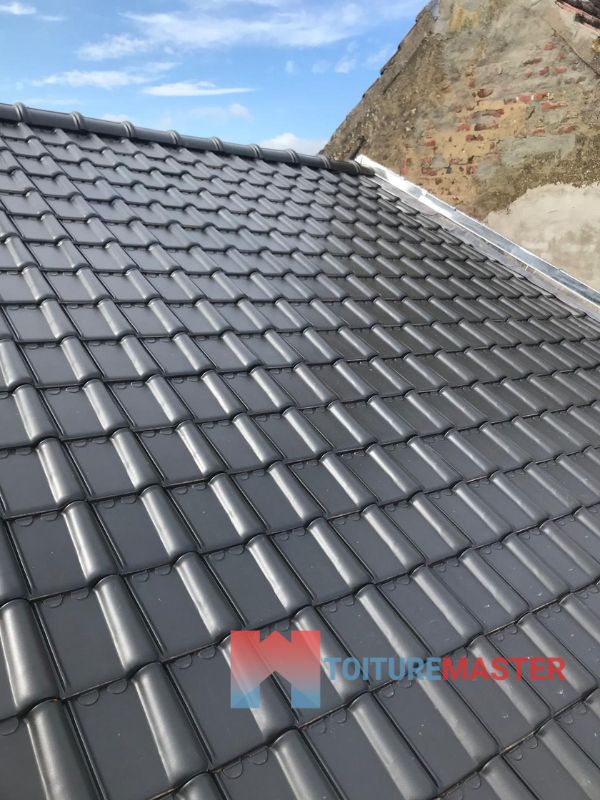


A flat roof in Brussels can be waterproofed with bitumen membrane (€40–€60 per m², 15–20 year lifespan), EPDM rubber (€60–€80 per m², 30–50 year lifespan), or PVC membrane (€70–€90 per m², 25–40 year lifespan). EPDM is the most widely specified system for Brussels residential properties due to its cost-effectiveness, flexibility in freeze-thaw conditions, and long lifespan. Flat roof leaks are most often caused by failed seams, blocked drains, flashing failures, and membrane shrinkage — all of which are repairable by a qualified roofer before they cause structural damage.
Introduction
Brussels has more flat roofs than most Belgian cities realise. The postwar housing estates of Molenbeek, Anderlecht, and Evere. The extensions and rear additions tacked onto 19th-century terraces in Koekelberg, Schaerbeek, and Laeken. The modernist apartment blocks of Etterbeek and Forest. The contemporary infill projects across Ixelles and Saint-Gilles. All of them have flat roofs. All of them, at some point, leak.
A flat roof in Brussels is one of the most demanding waterproofing environments in northern Europe. The city gets around 800mm of rainfall annually with no dry season — every month brings persistent rain, and the flat surface of a non-draining roof holds every drop of it. Add the freeze-thaw cycles of a Belgian winter — which stress every membrane junction, every flashing detail, every drain seal — and you understand why flat roof waterproofing failure is one of the most common roofing problems Toiture Master sees across the capital.
The frustrating part for most Brussels homeowners is that flat roof leaks are rarely dramatic. They don’t arrive with a sudden ceiling collapse. They show up as a small damp patch that appears, dries out, and reappears after the next heavy rain. By the time the stain is large enough to take seriously, the water has often been travelling through the roof structure for months — saturating insulation, rotting decking, and establishing mould in cavities that won’t be visible until the next renovation project strips the ceiling.
This guide is about stopping that before it starts — or stopping it now if it’s already begun. We’ll cover every flat roof waterproofing system available to Brussels homeowners in 2026, how each one performs in Belgian conditions, what flat roof repair and replacement costs, how to identify the eight causes of flat roof leaks before they become serious, and exactly what Toiture Master does when they take on a flat roof project in Brussels.
Table of Contents
- Why Flat Roofs in Brussels Are Particularly Vulnerable to Leaks
- The Three Waterproofing Systems Used on Brussels Flat Roofs
- Bitumen Membrane: Belgium’s Traditional Flat Roof System
- EPDM Rubber: The Modern Standard for Brussels Homes
- PVC Membrane: The Premium Long-Life Option
- Head-to-Head: Bitumen vs EPDM vs PVC for a Brussels Flat Roof
- The 8 Most Common Causes of Flat Roof Leaks in Brussels
- Flat Roof Repair vs Full Replacement: How to Make the Right Call
- What Flat Roof Waterproofing Costs in Brussels in 2026
- Flat Roof Insulation: The Step Most Brussels Homeowners Miss
- Green Roofs in Brussels: When a Living Roof Makes Sense
- How Toiture Master Handles Flat Roof Projects in Brussels
- Your Flat Roof Maintenance Checklist for 2026
- FAQ: Flat Roof Brussels — Your Questions Answered
Why Flat Roofs in Brussels Are Particularly Vulnerable to Leaks
A pitched roof sheds water by slope — gravity does most of the work. A flat roof has no such luxury. Water sits on the surface. It finds every weakness in the membrane, every gap in a flashing, every slightly low point where drainage is inadequate. On a flat roof, waterproofing isn’t one layer of protection — it has to be a complete system, with no weak links, because water has time and weight on its side.
In Brussels, this challenge is compounded by three specific climate factors.
Persistent year-round rainfall. Brussels receives roughly 800mm of rain annually, spread relatively evenly across all twelve months. There’s no extended dry period during which a marginally performing flat roof can recover. Every failure point — every pinhole in a membrane, every slightly lifted flashing edge, every drain that’s two-thirds blocked — is being tested by rain on an almost weekly basis throughout the year.
Freeze-thaw cycling in winter. From November through February, Brussels regularly experiences temperatures that drop below zero overnight and rise above it during the day. This cycling creates specific stress on flat roof membranes. Any water that has penetrated a small gap in the membrane or pooled in a low point freezes, expands by approximately 9%, and forces the gap wider. When it thaws, more water enters the now-larger gap. The cycle repeats. Each freeze-thaw event makes the problem slightly worse than the one before.
Temperature extremes across seasons. A Brussels flat roof membrane might experience temperatures from -10°C in a hard winter to +70°C on a black bitumen surface in an August heatwave. That’s an 80-degree temperature range across the seasons — and membranes, seams, and flashings must accommodate the expansion and contraction this causes without cracking or pulling apart. Systems and installations that don’t account for this movement fail prematurely.
Understanding these three factors explains why flat roof waterproofing in Brussels isn’t just about choosing the right material. It’s about choosing the right material correctly installed by someone who understands how Belgian conditions stress every component of the system
The Three Waterproofing Systems Used on Brussels Flat Roofs
Brussels residential flat roofs are almost exclusively waterproofed with one of three membrane systems: bitumen, EPDM, or PVC. Each has genuine advantages. Each has failure modes. The right choice depends on the roof’s size, structure, existing condition, insulation requirements, and the budget available.
Here’s a plain-language guide to all three.
Bitumen Membrane: Belgium's Traditional Flat Roof System
Bitumen waterproofing — called roofing in Belgian French — has been the standard flat roof system across Belgium for decades. It’s what’s on the vast majority of flat roofs in Brussels built before 2005, and it remains the most common system encountered during flat roof renovation work across Koekelberg, Molenbeek, Anderlecht, and the other inner Brussels communes where postwar flat-roofed housing is concentrated.
What it is: Bitumen membrane is a reinforced asphalt-based sheet material, typically 3–5mm thick, applied in one or two layers over a prepared substrate. Modern modified bitumen membranes contain either APP (atactic polypropylene — a plastic polymer) or SBS (styrene-butadiene-styrene — a rubber polymer) modifier, which significantly improves flexibility and weather resistance compared to traditional unmodified bitumen.
How it’s installed: Bitumen membrane is applied by torch — a gas torch melts the underside of the membrane sheet, bonding it to the substrate or the layer below. Two-layer systems (base layer + cap layer) provide better protection and longevity than single-layer systems. The torch application creates a continuous, fully bonded surface without seams requiring separate adhesive — a significant advantage over single-ply systems.
Performance in Brussels: Bitumen is well-established in Belgium’s climate. SBS-modified bitumen, in particular, remains flexible at low temperatures — important for a climate with regular winter freeze-thaw cycling. APP-modified bitumen performs better in heat, making it appropriate for south-facing or heavily sun-exposed Brussels flat roofs.
Lifespan: A well-installed two-layer SBS bitumen system on a Brussels flat roof should last 20–30 years. Single-layer systems or poorly installed two-layer systems may need attention at 12–15 years. The characteristic failure mode of aged bitumen is surface cracking and blistering — visible during a routine inspection before catastrophic water ingress occurs, which is one of bitumen’s practical advantages.
Maintenance: Bitumen flat roofs benefit from an inspection every 2–3 years and a protective surface coating applied at 8–10 years to extend lifespan. Drain clearance should be done annually — blocked drains cause ponding water that dramatically accelerates bitumen deterioration.
Cost: €40–€60 per m² installed in Belgium, including two-layer system and associated flashings. The most affordable flat roof waterproofing system. Old bitumen removal adds €10–€20 per m² where necessary.
Limitations: Bitumen’s main weakness in Brussels is the seams and laps between membrane sheets, and the detail areas — drains, upstands, penetrations, parapet walls. Torch application creates excellent coverage on flat areas but requires skilled execution at detail points. A poorly executed drain or parapet flashing in a bitumen system is typically the first point of water ingress.
EPDM Rubber: The Modern Standard for Brussels Homes
EPDM — ethylene propylene diene monomer — is a synthetic rubber membrane that has become the most widely specified flat roof system for Brussels residential properties over the past two decades. It’s what Toiture Master most commonly recommends and installs on new flat roof projects in the capital.
What it is: EPDM is a single-ply rubber membrane, typically 1.14mm or 1.52mm thick, supplied in large sheets that are cut to the exact dimensions of the roof and bonded to the substrate with a contact adhesive. Its defining characteristic is its elasticity — EPDM can stretch by 400% before tearing. This elasticity makes it uniquely well-suited to roofs that experience significant thermal movement, substrate settlement, or structural flexibility.
How it’s installed: The EPDM sheet is rolled out over a prepared substrate — typically a layer of PIR or EPS insulation board over the structural deck. The membrane is bonded with a specialised EPDM adhesive applied to both the underside of the membrane and the substrate. At edges, upstands, drains, and penetrations, EPDM-compatible flashing tape and liquid sealant are used to create the detail waterproofing.
The critical advantage of EPDM for Brussels properties is that large sheets can be cut to cover an entire roof as a single continuous piece — eliminating the seams that are the primary failure point of other membrane systems. A seamless EPDM installation on a simple rectangular Brussels extension or flat-roofed section has no joints to fail. That’s a fundamental durability advantage.
Performance in Brussels: EPDM was developed for northern European and North American climates and performs exceptionally well in Belgium’s conditions. It remains flexible at temperatures down to -45°C — far below anything Brussels experiences — and doesn’t become brittle in winter. It’s UV-resistant without requiring surface coatings or treatments. Its dark surface does absorb heat in summer, raising surface temperatures, but this doesn’t compromise the membrane itself in temperate Belgian conditions.
Lifespan: A properly installed EPDM roof should last 30–50 years in Brussels conditions. The Europages database of Belgian flat roof specialists confirms EPDM lifespans of 50 years and more, with 400% elasticity preventing the tearing and membrane failure that affects less flexible systems. Manufacturer warranties typically cover 25 years.
Maintenance: EPDM requires very little maintenance. Annual drain clearance and a biannual visual inspection for any punctures or detail failures are the standard recommendations. No surface treatments or coatings are required during the membrane’s normal lifespan. If a puncture or tear occurs — from foot traffic, a falling branch, or installation of rooftop equipment — it can be patched with EPDM-compatible repair patches that create a permanent, watertight repair.
Cost: €60–€80 per m² installed in Belgium, including membrane, adhesive, and associated EPDM detail flashings. Slightly more than bitumen upfront, but lower whole-life cost due to longer lifespan and minimal maintenance.
Limitations: EPDM’s seams — where two sheets join when a roof is too large for a single piece — require careful adhesive application and inspection. Seam adhesive has a shorter effective life than the membrane itself (typically 8–12 years before potential reactivation is needed), which is why minimising seam count through intelligent sheet sizing is important in EPDM installation. The dark colour of standard EPDM absorbs solar heat — relevant for Brussels top-floor apartments in summer, though white or light-grey EPDM variants are available at a premium.
PVC Membrane: The Premium Long-Life Option
PVC (polyvinyl chloride) membrane is the premium single-ply waterproofing system for Brussels flat roofs. It’s specified most often for larger flat roofs, commercial applications, and homeowners who want the longest available lifespan with the widest range of colour options.
What it is: PVC membrane is a thermoplastic single-ply sheet, typically 1.2–2.0mm thick, reinforced with a polyester or fibreglass fleece. Unlike bitumen (which is bonded by heat) or EPDM (which is bonded by adhesive), PVC seams are joined by hot-air welding — a process that fuses two PVC sheets into a continuous waterproof bond that is stronger than the membrane itself.
How it’s installed: PVC sheets are laid over the insulation layer and mechanically fixed or fully bonded to the substrate. At seams, a specialist hot-air welding gun heats and fuses the overlapping sheets. At details — drains, upstands, corners — pre-formed PVC corners and strips are similarly welded. The result is a complete membrane system where every joint is as strong as the surrounding material.
Performance in Brussels: PVC’s thermoplastic nature makes it highly flexible in cold weather and heat-weldable at detail points — a combination that suits Brussels’s climate well. The hot-air welded seams eliminate the adhesive-ageing issue that affects EPDM seam longevity. PVC is also available in white and light grey, creating a reflective surface that reduces summer heat gain — relevant for Brussels apartment buildings where top-floor overheating is a known issue in July and August.
Lifespan: A good-quality PVC flat roof system should last 25–40 years in Belgian conditions. Some Belgian roofing specialists cite lifespans beyond 40 years for quality PVC products properly installed. The welded seam system and the material’s dimensional stability give it a consistent performance profile across its lifespan.
Maintenance: Similar to EPDM — annual drain clearance, biannual inspection, no surface treatments required. PVC is slightly more resistant to puncture than EPDM due to its reinforcement layer.
Cost: €70–€90 per m² installed in Belgium. The most expensive of the three membrane systems, justified by lifespan and seam quality.
Limitations: PVC is not compatible with bitumen — if an existing bitumen roof is being replaced with PVC, the old bitumen must be completely removed or a separation layer installed, adding project cost. PVC also contains plasticisers that can migrate out of the membrane over decades, causing the sheet to become slightly more brittle in very old installations. High-quality PVC formulations from established European manufacturers have largely addressed this issue, but material specification matters.
The 8 Most Common Causes of Flat Roof Leaks in Brussels
Understanding why flat roofs leak in Brussels is the first step to stopping them permanently. Here are the eight causes Toiture Master encounters most consistently across the capital.
Cause 1: Failed or poorly installed membrane seams
The seam between two membrane sheets — or between the membrane and a detail component — is the most vulnerable point of any flat roof system. In bitumen roofing, laps between sheets can de-bond if torch application was insufficiently heated or if the surface wasn’t properly cleaned before application. In EPDM, seam adhesive begins to lose effectiveness after 8–12 years if the original bonding was marginal.
A failed seam doesn’t always create an immediate, obvious leak. Water enters the seam, travels under the membrane, and may appear at the interior at a point distant from the actual entry. This is why tracing the source of a flat roof leak often requires professional diagnosis rather than guesswork — the damp patch on the ceiling is rarely directly below the entry point.
Cause 2: Blocked or inadequate roof drains
Every flat roof must drain. Brussels building regulations — and basic physics — require that water doesn’t remain standing on a flat roof surface for more than 48 hours after rainfall. Standing water (called ponding) accelerates membrane deterioration, adds structural loading, and provides the time and pressure needed to force water through any marginal weakness in the waterproofing system.
The most common cause of ponding on Brussels flat roofs is blocked drains. Autumn leaf-fall, moss, bird debris, and general urban grime accumulate in and around roof drains and parapet scuppers. A drain that’s 75% blocked still drains in light rain — but in the heavy autumn and winter showers typical of Brussels, the backed-up water overtops the drain bowl and sits on the roof surface.
Clearing flat roof drains — a simple annual task — prevents the majority of ponding-related failures. It’s also one of the things Toiture Master checks during every flat roof inspection, because drain blockage is consistently the easiest fix with the highest consequence if left undone.
Cause 3: Flashing failures at upstands and penetrations
Every point where the flat roof membrane meets a vertical surface — a parapet wall, a dormer base, a vent pipe, a rooflight frame — requires a flashing detail that carries the membrane up the vertical face and seals it against the wall or penetration.
These upstand and penetration flashings are the most technically demanding part of any flat roof installation. They require the membrane material to change direction from horizontal to vertical, bond to a different substrate (brick, concrete, metal frame), and remain watertight through decades of thermal movement between the roof membrane and the wall structure.
On Brussels flat roofs, parapet upstand failures are the single most common cause of serious water ingress. The parapet is exposed to weather on three sides — top, front face, and the rear that faces the roof. If the membrane termination at the top of the parapet is not correctly formed, or if the parapet capping allows water behind the membrane upstand, water enters the roof construction at the wall junction — one of the most damaging entry points because it saturates the wall construction as well as the roof.
Cause 4: Membrane shrinkage
EPDM rubber can shrink over time as a result of UV exposure, age, and installation without adequate acclimatisation time. When EPDM shrinks, it pulls at its perimeter — pulling back from parapet walls, lifting at drains, and creating tension at corners and penetrations. The membrane itself may remain intact while the edges pull away from their bonded terminations.
Membrane shrinkage is a process issue — it’s largely preventable through correct installation (allowing EPDM to acclimatise to ambient temperature before cutting and bonding, and ensuring adequate perimeter termination depth). But on existing roofs — particularly those installed more than 15 years ago when EPDM technique was less standardised in Belgium — shrinkage is a common finding during inspection.
Partial shrinkage can be addressed by cutting and re-bonding the lifted edges with fresh EPDM adhesive. Significant shrinkage across a large area, or shrinkage combined with membrane thinning or brittleness, indicates that full membrane replacement is the appropriate solution.
Cause 5: Ponding water exceeding 48 hours
As discussed above, ponding water is both a symptom and a cause. Once water has been sitting on a flat roof surface for more than 48 hours after rainfall, it begins to create problems independent of why it’s pooling.
Even excellent membrane systems aren’t designed for permanent immersion. The membrane’s surface degrades faster in contact with standing water that contains organic material (leaves, algae, bird matter), which is acidic and chemically active. The additional weight of standing water — water weighs approximately 1kg per litre — loads the roof structure and can cause deflection in lightweight flat roof constructions, which creates a self-reinforcing low point that holds more water.
The correct response to chronic ponding on a Brussels flat roof isn’t just clearing the drain — it’s establishing why the water is pooling and addressing the root cause, whether that’s inadequate drainage, structural deflection, or insufficient fall built into the roof design.
Cause 6: Surface blistering and delamination
Blisters — dome-shaped bubbles between the membrane and the substrate — develop when air or moisture is trapped beneath the membrane during installation or migrates there subsequently. They’re most common in bitumen roofing where the substrate was damp at the time of torch application, trapping steam beneath the bonded membrane.
Small blisters don’t immediately leak — the membrane above them is intact. But as blisters grow and the membrane above them thins through UV exposure and temperature cycling, they eventually rupture, creating a puncture or split that allows water entry.
In Brussels, blistering is most commonly found on flat roofs installed in damp conditions (not uncommon in Belgium) or on roofs where a second membrane layer was applied over existing damaged bitumen without proper substrate preparation. Any blister that’s cracked, showing discolouration, or growing in size warrants professional assessment.
Cause 7: Punctures from foot traffic and rooftop equipment
A flat roof that’s accessible — for maintenance of HVAC equipment, solar panel installation, or simply as a usable outdoor space — is a flat roof that receives foot traffic. Every foot placement on an unprotected membrane creates point loading. Sharp objects — tools dropped, gravel pieces, a sharp screw head — can puncture even robust membranes.
On Brussels residential properties, the most common puncture scenario is the installation of rooftop equipment after the waterproofing is complete — a satellite dish, an antenna mounting, a solar panel fixings bracket — without adequate protection of the membrane surface. Every penetration through a flat roof membrane requires a proper sealed detail. Every fixing that bears directly on the membrane without a pad or walkway is a potential puncture.
EPDM is relatively tolerant of minor puncture — small holes can be repaired permanently with EPDM-compatible patches. But multiple punctures, or punctures in areas where the membrane is already under shrinkage tension, require professional assessment to determine whether patching or local replacement is the appropriate response.
Cause 8: Inadequate initial roof design and drainage falls
This is the cause that no amount of maintenance can fully compensate for — a flat roof that was designed or built without adequate fall to drain.
Belgian building standards specify a minimum fall of 1.5–2% for flat roof drainage — approximately 15–20mm per running metre toward the drain. A 5-metre wide flat roof extension should have its low point at least 75–100mm lower than its high point. This creates visible drainage toward the outlet during rain and prevents chronic ponding.
Many Brussels flat roofs — particularly on older extensions in Anderlecht, Forest, and Molenbeek — were built with inadequate falls. The roof looks level to the eye, but water simply doesn’t drain effectively. Over years, this creates chronic ponding at low points, accelerated membrane deterioration at those points, and eventually a leak precisely where the membrane has been under the most stress.
When Toiture Master replaces a flat roof with inadequate falls, they address the drainage design as part of the replacement — either by adjusting the roof structure, using tapered insulation (which is sloped to create drainage falls without touching the structure), or repositioning or adding drain outlets.
Flat Roof Repair vs Full Replacement: How to Make the Right Call
This is the question every Brussels homeowner with a leaking flat roof needs to answer, and the honest answer depends on five factors.
Age of the existing membrane. A bitumen roof that’s 10 years old with a single failed detail is a repair. The same roof at 22 years old with multiple blisters, surface cracking, and a failed parapet upstand is at the end of its economic life — repair costs money but doesn’t reset the clock. Full replacement at this point is more cost-effective than repeated repairs over the next three to five years.
Extent and nature of failure. A single puncture or a lifted flashing edge: repair. Failed seams across multiple areas, membrane shrinkage across the perimeter, and chronic ponding at multiple low points: replacement. The general rule used by Belgian flat roofing professionals is: if repair costs would exceed 50% of replacement cost, replace.
Condition of the underlying insulation and decking. If water has been entering the roof long enough to saturate the insulation and begin rotting the structural decking, the repair scope expands significantly. Wet insulation must be replaced — it provides no thermal performance and doesn’t dry out effectively in situ. Rotted decking must be replaced. At that point, the cost of stripping the existing membrane and replacing the substrate often approaches the cost of a full system renewal.
Membrane compatibility. PVC membrane cannot be installed directly over bitumen. If a Brussels homeowner wants to upgrade from their existing bitumen to a PVC system, the old bitumen must be removed completely. EPDM over bitumen requires a separation layer. These compatibility requirements affect the economics of different repair strategies.
The homeowner’s plans for the property. A five-year repair on a property being sold or redeveloped is rational. A permanent replacement system on a family home where someone will live for 20+ years is the better investment even at higher upfront cost.
Toiture Master’s site visit includes an honest assessment of where the existing roof sits against these criteria. They don’t recommend replacement for a roof that needs repair, and they don’t recommend repair for a roof that’s structurally at end of life.
Flat Roof Insulation: The Step Most Brussels Homeowners Miss
Here’s where most Brussels flat roof renovation projects fall short. The homeowner focuses entirely on the waterproofing membrane — which is visible, which is the immediate problem — and misses the opportunity to transform the thermal performance of the space beneath.
A flat roof without insulation, or with aged and compressed insulation, has a U-value of 1.5–2.0 W/m²K or worse. Brussels building regulations target 0.25 W/m²K for new or significantly renovated flat roofs. The difference in thermal performance between an uninsulated and a properly insulated flat roof is enormous — and the opportunity to install insulation is created precisely when the waterproofing membrane is being replaced.
The warm roof system — the correct approach for Brussels flat roofs — places the insulation above the structural deck and below the waterproofing membrane. The structural deck stays warm (never experiencing condensation risk), the insulation is protected from mechanical damage, and the waterproofing membrane is the outermost layer.
The standard insulation material for Brussels warm flat roofs is PIR (polyisocyanurate) rigid board — the same material used in sarking insulation on pitched roofs. A 100mm PIR board achieves approximately R = 4.5 m²K/W, bringing the flat roof’s U-value to around 0.20 W/m²K — well within the Brussels regulatory target.
Adding 100mm PIR insulation to a flat roof waterproofing replacement project costs approximately €30–€50 per m² for material and installation — a relatively modest addition to a project that’s already disturbing the roof surface. Not doing it means missing the most cost-effective insulation opportunity available, because the next chance to insulate from above requires stripping the membrane again.
For Brussels homeowners thinking about the 2033 EPC label D requirement, roof insulation is consistently the most impactful single improvement — and a flat roof replacement project is the perfect moment to do it.
Green Roofs in Brussels: When a Living Roof Makes Sense
Brussels Region actively encourages green roofs — roofs partially or fully covered with growing medium and vegetation — through several planning policies and grant mechanisms. The city has a target to increase green roof coverage as part of its urban heat island mitigation strategy.
A green roof sits on top of a conventional waterproofing system — typically EPDM or PVC, which are both fully compatible with planting installations. The growing medium (typically 80–150mm of specially engineered substrate) sits on a drainage layer, which sits on a root-barrier layer, which sits on the membrane.
Two types of green roof for Brussels properties:
Extensive green roof: A thin (80–120mm) growing medium planted with sedum, moss, and low-maintenance alpine species. Self-managing — requires no irrigation and minimal maintenance after establishment. Adds 80–150kg per m² to the roof loading. Cost: €40–€80 per m² for the green roof system on top of a new waterproofing installation.
Intensive green roof: A deeper growing medium (200mm+) that can support grasses, perennials, shrubs, and even small trees. Requires irrigation, regular maintenance, and structural assessment to confirm the existing structure can carry the additional load. Creates genuinely usable roof garden space. Cost: €80–€200+ per m² depending on depth and planting specification.
For a Brussels terraced house extension with an accessible flat roof, an extensive green roof adds thermal mass to the roof (moderating summer overheating), reduces stormwater runoff at a time when Brussels is investing heavily in urban drainage improvements, improves biodiversity, and can extend the life of the waterproofing membrane beneath it by protecting it from UV and temperature extremes.
Toiture Master can advise on the structural implications and waterproofing specification for green roof projects as part of a flat roof consultation.
How Toiture Master Handles Flat Roof Projects in Brussels
Toiture Master carries out flat roof waterproofing, repair, and replacement work across all 19 Brussels communes from their base at Avenue du Panthéon 88 in Koekelberg. Their flat roof service — covering bitumen, EPDM, and PVC systems — is part of a complete roofing offer that also includes emergency repair response for active flat roof leaks.
Here’s exactly what their process looks like on a Brussels flat roof project.
Step 1: Free site visit and diagnostic inspection
Every flat roof project starts with a free visit. Toiture Master’s team accesses the roof, inspects the full membrane surface, checks all drain outlets, examines every parapet upstand and penetration detail, and assesses the condition of the underlying insulation and structure where access permits.
They’ll identify the cause of any existing leak — not just the symptom — and give you an honest opinion on whether repair or replacement is the appropriate response. This visit costs nothing and comes with no obligation.
Step 2: Written quote with full system specification
The quote specifies the waterproofing system recommended (bitumen, EPDM, or PVC), the insulation specification if included, the scope of substrate preparation and repair work, the drain details, the parapet and penetration flashing approach, and the total price — broken down clearly. The 6% VAT rate is applied correctly for qualifying properties.
No hidden extras. What’s in the quote is what you pay.
Step 3: Substrate preparation — the step that determines everything
The quality of the substrate determines the quality and longevity of any membrane system installed over it. Toiture Master prepares the substrate correctly — removing old membrane where compatibility requires it, repairing or replacing damaged decking, installing new or additional insulation, and ensuring the roof surface has adequate drainage falls before any new membrane is applied.
This step is where less experienced contractors cut corners — installing a new membrane over a compromised substrate creates the conditions for early failure regardless of membrane quality. Toiture Master doesn’t shortcut here.
Step 4: Membrane installation — correct technique throughout
For EPDM: membrane sheets are cut to minimise seam count, allowed to acclimatise if temperature conditions require, and bonded with appropriate EPDM-specific adhesive. Seams are formed with EPDM seam tape under controlled conditions. All parapet upstands, drain details, and penetration flashings are completed with EPDM-compatible materials before the field membrane is bonded — so every detail is waterproof before the main surface is complete.
For bitumen: torch application is carried out by trained operatives with appropriate fire precautions. Two-layer systems are installed with correct lap positions and full bond on both layers. Detail areas are completed with pre-formed bitumen flashing strips at drains, parapet corners, and penetrations.
For PVC: membrane sheets are hot-air welded at every seam, creating a bond stronger than the surrounding membrane. No adhesive-dependent joints in the field of the roof.
Step 5: Final inspection and water test
Before Toiture Master’s team leaves any flat roof project, they carry out a final visual inspection of the complete membrane surface and water-test the drain outlets to confirm they’re flowing freely and that no water is backing up on the roof surface. You receive documentation of the completed work and the materials used — including the workmanship guarantee.
Emergency flat roof response
For active flat roof leaks — a ceiling that’s actively dripping, a flat roof extension showing significant water ingress after a storm — Toiture Master offers priority response. Call +32 493 47 14 49 directly for emergency flat roof situations across Brussels.
📍 Avenue du Panthéon 88, 1081 Koekelberg 📞 +32 493 47 14 49 | 📧 info@toituremaster.be
Your Flat Roof Maintenance Checklist for 2026
Spring (March–April):
- Clear all drain outlets and scuppers of winter debris — this is the single most important maintenance task
- Visual inspection of the full membrane surface for any blistering, cracking, or lifted edges
- Check all parapet upstands — look for any membrane that’s pulling away from the wall face
- Inspect around all roof penetrations (vents, pipes, rooflights) for any gap in the flashing seal
- Run water through drains to confirm free drainage — no ponding should remain after 48 hours
- Remove any debris accumulation — organic matter traps moisture and accelerates membrane deterioration
Autumn (October–November):
- Full drain clearance after the main leaf-fall — the highest-risk blockage period
- Check for any new blistering or surface cracking not present in spring
- Inspect all parapet cappings — loose or missing coping stones allow water behind the upstand
- Check gutter and downpipe connections at the flat roof perimeter
- Note any new or expanded ponding areas compared to previous year — indicates drain blockage or structural movement
Every 3–5 years — professional inspection:
- Full professional flat roof inspection by Toiture Master
- Check membrane adhesion at all seams and perimeter terminations
- Probe for any soft spots indicating saturated insulation beneath the membrane
- Assess drain condition — replace aged drain components before they fail
- Apply protective surface treatment to bitumen roofs at 8–10 years to extend membrane life
- Reactivate or re-apply EPDM seam adhesive if any lift is detected at seam locations
FAQ: Flat Roof Brussels — Your Questions Answered
What is the best flat roof waterproofing system for Brussels in 2026?
For most Brussels residential properties — extensions, flat-roofed sections of terraced houses, rear additions — EPDM rubber is the best all-round choice. It costs €60–€80 per m² installed, lasts 30–50 years, requires minimal maintenance, and performs excellently in Belgium’s freeze-thaw winter climate. Its elasticity makes it the most tolerant of the thermal movement and substrate settlement typical of older Brussels housing stock. PVC is the premium alternative for larger roofs or where a welded seam system is preferred. Bitumen remains appropriate for budget-constrained projects where a shorter lifespan is acceptable.
How much does flat roof replacement cost in Brussels in 2026?
A full flat roof replacement including new waterproofing membrane costs approximately €40–€60 per m² for bitumen, €60–€80 per m² for EPDM, and €70–€90 per m² for PVC — installed, including associated flashings and drain details. For a typical Brussels extension of 30 m², expect €1,200–€2,700 depending on system choice. Old membrane removal adds €10–€20 per m². Including PIR insulation (recommended where existing insulation is aged or absent) adds €30–€50 per m². All work on homes over 10 years old benefits from the 6% Belgian VAT rate.
Why does my flat roof in Brussels keep leaking after repairs?
Recurring flat roof leaks after repairs almost always indicate that the repair addressed a symptom rather than the root cause. Common scenarios: a patched puncture where the membrane around it is aged and failing at multiple other points; a re-bonded seam where the underlying drainage fall is inadequate and ponding water is continuously stressing the membrane; or a repaired drain where the parapet upstand is also failing but wasn’t inspected. A diagnostic inspection that covers the full roof — not just the reported leak point — is the first step to breaking the cycle. Toiture Master’s free site visit includes full inspection, not just a look at the reported failure
How long does a flat roof last in Brussels?
Lifespan depends on the membrane system: bitumen lasts 15–25 years (2-layer SBS system, well maintained), EPDM lasts 30–50 years, and PVC lasts 25–40 years. These figures assume correct installation, annual drain clearance, and biannual inspection. Poor installation, chronic ponding, and lack of maintenance can halve these figures. The 30-year whole-life cost of EPDM is lower than bitumen despite its higher upfront cost, because EPDM typically reaches the end of its life after one installation cycle rather than requiring mid-life replacement.
What causes ponding water on my Brussels flat roof?
Ponding — water remaining on the roof surface for more than 48 hours after rainfall — is caused by one or more of: blocked drains or scuppers, inadequate drainage falls in the roof design, structural deflection creating low points, or parapet coping failure directing external water onto the roof. Annual drain clearance prevents the most common cause. Chronic ponding from inadequate falls requires a structural solution — either adjusting roof drainage or installing tapered insulation that creates falls without structural modification. Toiture Master identifies and addresses the cause of ponding as part of any flat roof assessment.
Can I walk on my flat roof in Brussels?
It depends on the membrane system and the construction beneath it. An EPDM or PVC membrane over a robust structural deck can tolerate occasional foot traffic for maintenance purposes. Avoid sharp-soled shoes, dragging equipment, and concentrated point loads (ladder feet without pads). For any rooftop that needs regular access — for HVAC maintenance, solar panels, or as a usable roof terrace — rubber or composite walkway pads should be installed over the membrane to distribute load and prevent puncture. Bitumen membrane is slightly more puncture-resistant but should also be protected on regularly accessed roofs. If you’re planning a roof terrace conversion, Toiture Master can specify the appropriate membrane system and protection layers.
Should I insulate my flat roof when replacing the waterproofing membrane?
Yes — almost always. When the membrane is being replaced and the roof surface is open, adding PIR insulation costs approximately €30–€50 per m² incremental to the project. Not doing it means paying again to open the roof surface if you want to insulate in future. A 100mm PIR insulation layer on a Brussels flat roof brings the U-value from approximately 1.5–2.0 W/m²K (uninsulated) to around 0.20 W/m²K — transforming the roof from the building’s worst thermal element to one of its best, reducing heating bills, improving summer comfort, and improving the EPC label. With Brussels requiring all homes to reach label D by 2033, it’s a decision that pays back year after year.
Toiture Master offers a completely free flat roof inspection and written quote across all 19 Brussels communes — no obligation, no pressure. Whether you have an active leak, chronic ponding, an aged membrane, or you simply want to know what condition your flat roof is in, they’ll give you an honest assessment before any work is discussed.
📞 +32 493 47 14 49 | 📧 info@toituremaster.be | 🌐 toituremaster.be/toiture-plate/